
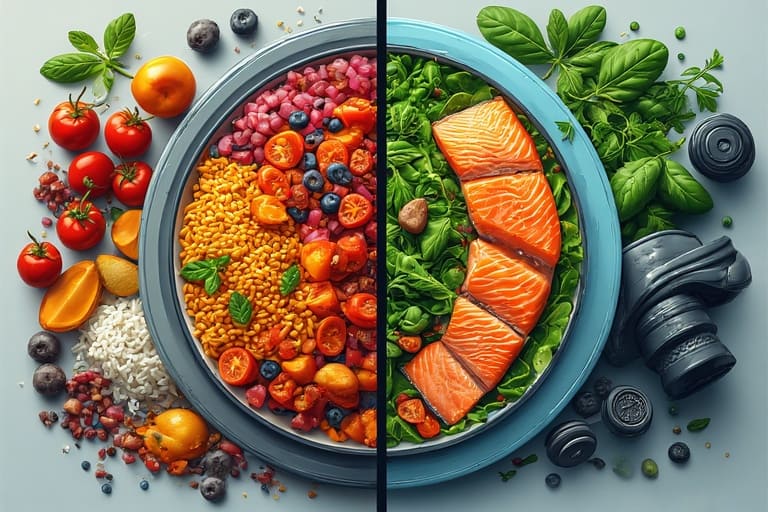
Or, you're in a cut, you're hungry and stuck lifting the same weight week after week. Carb cycling can flip this script. It is not a fad diet - it is an adaptable tool that utilizes a staggered approach to carbohydrates through high, moderate, and low carbohydrate days. Carb Cycling is built off of metabolic principles and is frequently under-utilized by athletes with goals of fat loss while still maintaining power output or muscle. In 2025, with our busy lives dominating our ability to recover, the simplicity and impact of carb cycling is a great fit or why we are here. We are going to simplify the basics, provide benefits of carb cycling based on recent evidence, and provide a plan or two that you can implement right away. No fluff, only plans to recharge your training sessions and increase recovery times.
What Is Carb Cycling?
Carb cycling varies the amount of carbs consumed based on workout intensity or rest/recovery period, or the goal at hand. High carb days (200-300g for a 70kg athlete) will "fill" muscle with glycogen to allow for explosive lifts or endurance pushes. Low-carb days (50-100g) shift into fat burn, which facilitates a calorie deficit. Moderate days (150-200g) are a good point between the two and will feel eased hormonal fluctuations.
This process mimics how professionals are training. Reviewing a WebMD page from 2025 puts it simply as a simple way to maximize glycogen stores just when you need them and to avoid constant crash and depletion from constant low-carb consumption. It is essentially a periodic program for your plate, meaning you will strategize and fuel your body based on effort and purpose, much like switching up rep patterns in the gym-at some point you have to eat to fuel your body for the work we are demanding of it.
To begin, calculate baselines. Get to muscle protein targets (1.6-2.2g/kg of protein), then get to an appropriate fat target (0.8-1g/kg of fat). Once you have everything accounted for, fill the remaining calories with carbs. Follow to adjust the pattern. For an easy place to start, you may want to experiment with a 4-7 day rotation, with two high, three moderate, and two low days. You can however, add or direction to your split as you feel necessary.

Fat Loss Without the Drag, Performance With Punch
Why do it? Carb cycling zips up both looks and performance. Fat loss occurs through various metabolic efficiencies - high days will help replenish glycogen levels to avoid any slow-downs, then low days will ramp up fat oxidation. An article from the 2024 Lumen report states that their users lose about 1-2% body fat per month while adhering to the regimen more than straight keto, many of them due to the built-in refeeds. Also, Precision Nutrition's 2024 insights state that this will open barriers up - like plateauing - while creating stability in leptin, so that hunger spikes stay around the actual levels during cuts.
When it comes to performance advantages, the effects can be more substantial. February 2025 the PMC published a review on lower carb approaches and showed that if you cycle carbs you can maintain aerobic capacity (VO2 max) as you lean out compared to the steady state when you typically degrade endurance by 10-15%. For others who lift, timing carbohydrates after lifting when your insulin response is stimulated is beneficial to shuttling carbohydrates into the muscle, where they are used for recovery and repair. The ACE Fitness 2024 review of many timing studies found that 20 grams of carbohydrates around exercise can ease soreness and increase next day strength by about 5-8%. Additionally, a Medical News Today 2025 review found that it can help chronic adaptions - as it eases PCOS symptoms by way of managing insulin levels, while also promoting 10-20% efficiency for the trained athlete using mixed approaches.
Are there cons? Of course, it takes planning - if not, it can backfire, leaving you sluggish in energy. For women or endurance athlete's, you may need a bigger high to babysit your hormone levels when implementing after prolonged low periods. Regardless, always ease into a new protocol if you are at risk of aggressive thyroid levels and be sure to check with a coach.
Implementation: Your Step-by-Step Roadmap
First, knock out the cycle. For a 2,200-calorie framework (to adjust accordingly to TDEE calculator):
- High-Carb Day (Heavy Lifts / Endurance): 250-300g carbs, 150g protein, 60g fat. Ample fuel for power.
- Moderate Day (Light/Active Recovery): 150-200g carbs, 160g protein, 70g fat. Keeping there.
- Low-Carb Day (Rest/Weights): 50-100g carbs, 170g protein, 80g fat. The body is in burn mode.
Cycle example: Mon (High - squats), Tue (Mod - yoga), Wed (Low - rest), Thu (High - HIIT), Fri (Mod - upper body), Sat (Low - walk), Sun (Mod - off).
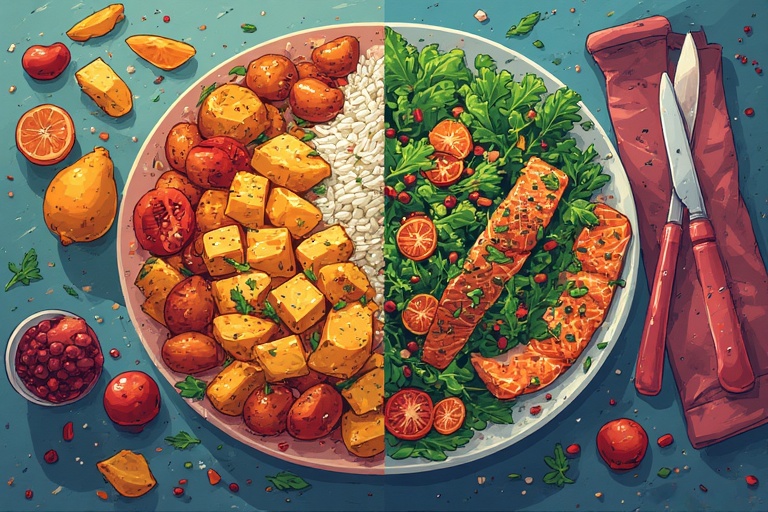
Quality is paramount: highs include oats, sweet potatoes, quinoa; lows include greens and nuts. Double the hydration on highs because glycogen pulls creatine.
Example of 3-Day Meal Plans (1,800-2,200 Cal, 70kg Athlete)
High-Carbohydrate Day (Legs - 280g Carbohydrates):
- Breakfast: Oatmeal with banana, berries, and 20g whey (60g carbohydrates).
- Snacks: Apple with almond butter (30g carbohydrates).
- Lunch: Quinoa bowl with chicken, vegetables, and sweet potato (80g carbohydrates).
- Post-Workout: Rice, turkey, and broccoli shake (70g carbohydrates).
- Dinner: Pasta primavera with shrimp (40g carbohydrates).
In Total: Well-balanced explosion to help reload glycogen.
Moderate Day (Upper Body - 180g carbohydrate):
- Breakfast: Eggs, whole grain toast with avocado (40g carbohydrates).
- Snacks: Greek yogurt parfait with fruit (25g carbohydrates).
- Lunch: Turkey wrap in whole-wheat tortilla with salad (50g carbohydrates).
- Snack: Carrot sticks with hummus (20g carbohydrates).
- Dinner: Salmon, brown rice, and asparagus (45g carbohydrates).
Even energy, no crashing during the day.
Low Carb Day (Rest Day - 70g Carbs):
- Breakfast: Omelet made with spinach, cheese, sausage (10g total).
- Snack: Celery, peanut butter (10g total).
- Lunch: Grilled steak salad with olive oil (15g total).
- Snack: Cottage cheese, cucumber (5g total).
- Dinner: Zucchini noodles, pesto chicken (30g total).
Fat-focused to support recovery depth.
This can be rotated on a weekly basis, and I'm recommending you log your energy. If highs feel flat, consider tweaking portions of your macronutrients, adding 50g carbs.
Level Up: Cycle Smart, Thrive Strong
Carbohydrate cycling is your edge, a dance of nutrition timed to your life that cuts fat, fuels workouts, and protects recovery, all according to current evidence 2024-2025. It is more than a rigid set of rules, but flexible nutrition, adaptable to you. Pick one type of cycle at a time, and track on a journal or app.
Sleep and stress should also be tracked with this as a validation for maximal benefit. If you are new to macronutrient percentages or cycling additions, include a nutritionist to consult, as there is no right way - just a personally better way for yourself to make gains; the sooner, the better. Eat right, train hard, and own your fire.