📋 How to Do?
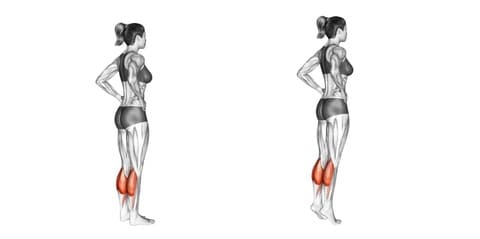
- Stand on edge of step or platform, heels hanging off, balls of feet on edge.
- Hold rail for balance if needed. Inhale and lower heels below step level for stretch.
- Exhale and rise onto toes, squeezing calves at top, pausing 1 second.
- Move slowly to maximize time under tension.
- Perform 4 sets of 15-20 reps.
Use a stable object to hold on it for balance; lower heels slowly until you feel full stretch but do not force it; hold briefly at the top of the contraction, and do not continue if ankle injuries are present, but consult your professional for modifications.
💪 Working Muscles
Primary: Gastrocnemius (plantar flexion of ankle with knee extended); Soleus (plantar flexion with knee flexed for endurance); Secondary: Tibialis Anterior (eccentric control during lowering)
Equipment Needed: Step or platform, dumbbells (optional)
Difficulty: Beginner
✨ Benefits
Calf raises increase unwanted ankle instability which is an important new concept for injury prevention in running, which also assists with increased running/jumping power with improved plantar flexion. Calf raises also contribute to increased symmetry of the legs which contributes to visual aesthetics of the human body.
🔥 Burned Calories
Burns Approx. 40-60 kcal per 10 min at moderate intensity
Metabolic Impact: Low to moderate, focused on isolation
Common Mistakes
- Bouncing at the top, using momentum instead of controlled contraction.
- Not lowering fully for stretch, limiting soleus activation.
- Shifting weight to toes unevenly, causing ankle instability.