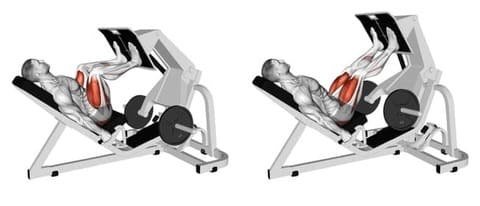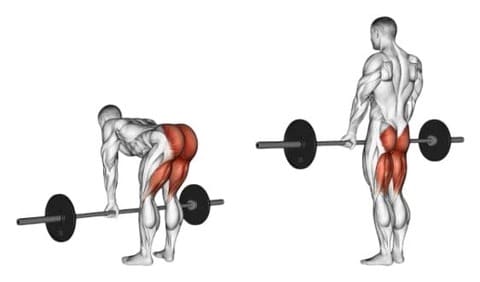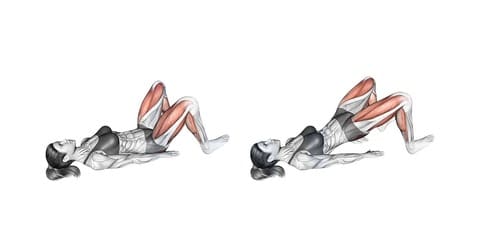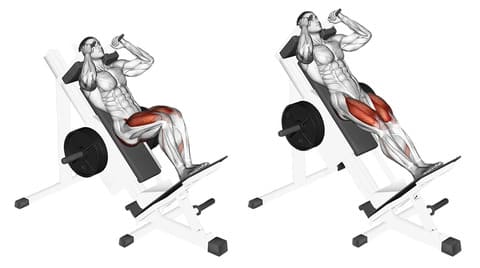
📋 How to Do?
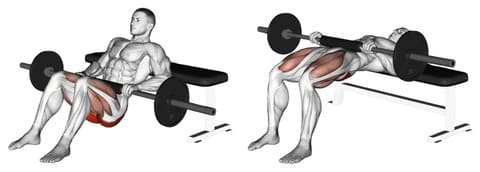
- Sit on the ground with a barbell over your hips, rolling it into place, and position your upper back against a bench with feet flat and hip-width apart.
- Drive through your heels to lift your hips until your body forms a straight line from knees to shoulders, squeezing glutes at the peak.
- Hold the contraction briefly for full activation, then lower your hips in a controlled manner back to the start.
- Perform 3 sets of 10-12 reps, emphasizing the top squeeze for optimal glute hypertrophy.
Use a pad under the bar for hip comfort during hip thrusts, bracing your core to maintain neutral spine, and increase weight gradually to avoid overload. Warm up with glute bridges for activation. If hip pain occurs, regress to bodyweight versions.
💪 Working Muscles
Primary: Gluteus Maximus (hip extension); Secondary: Hamstrings (co-contraction); Quadriceps (knee stabilization); Core (anti-flexion bracing)
Equipment Needed: Barbell, bench, padding for hips
Difficulty: Intermediate
✨ Benefits
Hip thrusts build glute strength crucial for speed, jumping, and injury prevention in sports, while enhancing hip extension for better squat performance. They target the posterior chain effectively without lower back strain.
🔥 Burned Calories
Burns Approx. 60-80 kcal per 10 min at moderate intensity
Metabolic Impact: Moderate, ideal for glute-focused training
Common Mistakes
- Overextending at the top, which arches the lower back and reduces glute isolation.
- Placing feet too far forward, recruiting quads excessively over the glutes.
- Failing to squeeze glutes at the peak, diminishing the exercise's activation benefits.