📋 How to Do?
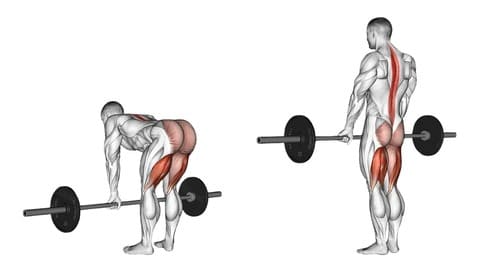
- Stand with feet hip-width, bar over mid-foot. Hinge hips back, bend knees, grip bar outside knees.
- Brace core, chest up, shoulders over bar. Inhale deeply.
- Drive through heels to lift, hips and chest rising together, keeping bar close to shins.
- Lock out at top with hips forward, shoulders back. Exhale and lower controlled.
- Perform 3-5 sets of 5-8 reps with heavy loads.
Wear fitted lifting shoes for traction in deadlifts, bracing your core like prepping for a punch to lock in stability. Commence light to hone the hip hinge, and enlist a coach for form audits to sidestep back injuries. Incorporate cat stretches post-set for mobility.
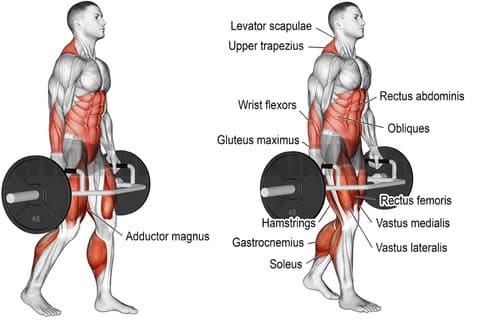
💪 Working Muscles
Primary: Erector Spinae (spinal extension to maintain upright posture); Gluteus Maximus (hip extension during lift); Hamstrings (knee flexion and hip hinge stabilization); Secondary: Latissimus Dorsi (gripping and stabilizing the bar); Trapezius (upper back for lockout); Quadriceps (initial knee extension off the floor)
Equipment Needed: Barbell, weight plates
Difficulty: Advanced
✨ Benefits
Deadlifts fortify back resilience against injuries via erector and trap training, unleashing hip-driven power for sprinting or jumping in athletic pursuits. They cultivate core and spinal stability for heavy lifts and daily tasks. Plus, they spike testosterone for recovery and growth.
🔥 Burned Calories
Burns Approx. 90-110 kcal per 10 min at moderate intensity
Metabolic Impact: High, excellent for full-body strength and power
Common Mistakes
- Rounding the back at any point, heightening spinal disc injury risk.
- Pulling with arms instead of legs and hips, straining biceps or shoulders.
- Not bracing core properly, leading to energy leaks and lower back fatigue.