📋 How to Do?
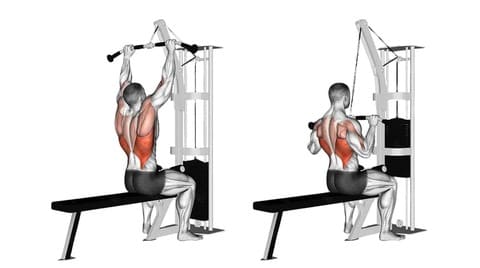
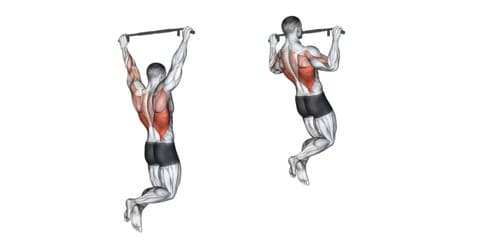
- Hang from a pull-up bar with overhand grip wider than shoulders, palms away, core engaged.
- Inhale and pull your body up by driving elbows down and back, until chin passes the bar.
- Squeeze lats at the top, pause for 1 second.
- Exhale and lower controlled to full hang, avoiding kipping.
- Aim for 3 sets of 6-10 reps; use assistance if needed.
Engage your core to eliminate swinging in pull-ups, opting for assisted bands if full reps challenge you to build safely. Warm shoulders with face pulls beforehand to avert strain, and descend controlled for eccentric strength gains. Consult a trainer if new to overhead pulls.
💪 Working Muscles
Primary: Latissimus Dorsi (vertical pulling and shoulder adduction); Biceps Brachii (elbow flexion to lift body); Secondary: Trapezius (scapular depression and retraction); Rhomboids (mid-back stabilization); Core Stabilizers (maintaining body alignment during hang and pull)
Equipment Needed: Pull-up bar
Difficulty: Advanced
✨ Benefits
Pull-ups widen lats for aesthetic appeal and functional prowess in climbing or gymnastics, while incrementally boosting shoulder mobility and grip endurance in vertical pulling routines. They engage the full upper body for metabolic efficiency. Long-term practice fosters postural alignment and confidence.
🔥 Burned Calories
Burns Approx. 80-100 kcal per 10 min at moderate intensity
Metabolic Impact: High, ideal for bodyweight calisthenics
Common Mistakes
- Kipping or swinging the body, which reduces lat activation and risks shoulder injury.
- Not fully extending at the bottom, shortening range and limiting growth.
- Gripping too narrow, shifting emphasis to biceps over back muscles.