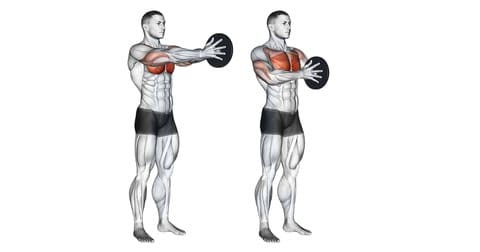
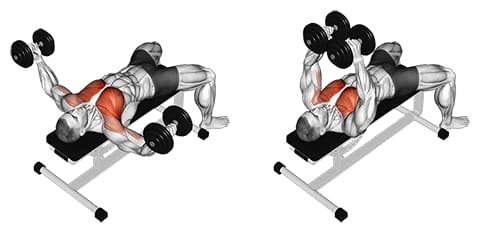
📋 How to Do?
- Lie on a flat bench holding a dumbbell in each hand above your chest with palms facing each other and a slight bend in your elbows (like hugging a barrel).
- Inhale and lower the weights out to the sides in a wide arc, stopping when you feel a deep stretch in your chest (shoulders should not move).
- Exhale and squeeze your pecs to bring the weights back up over your chest in a controlled arc, focusing on the contraction at the top.
- Keep the movement slow (2-3 seconds per phase) to avoid momentum and shoulder stress. Aim for 3 sets of 10-15 reps, using lighter weights for better control.
Maintain a slight elbow bend at all times to protect shoulder joints during isolation exercises, and select weights light enough for full control without compromising form. Avoid lowering too far to prevent pec tears or shoulder strains. Include a proper warm-up to enhance joint mobility and reduce injury risk.
💪 Working Muscles
Primary: Pectoralis Major (horizontal adduction and internal rotation of the shoulder for the hugging motion); Secondary: Anterior Deltoids (stabilization during arm extension); Biceps Brachii (minor elbow flexion and stabilization)
Equipment Needed: Dumbbells, bench
Difficulty: Beginner
✨ Benefits
Chest flyes enhance flexibility and range of motion essential for compound lifts like the bench press, while targeting the inner pecs for aesthetic separation and improved chest appearance. They promote muscle endurance through higher rep ranges without overload, ideal for hypertrophy training. Additionally, they reduce shoulder tension and support balanced upper body development over time.
🔥 Burned Calories
Burns Approx. 40-60 kcal per 10 min at moderate intensity
Metabolic Impact: Low to moderate, great for isolation and endurance
Common Mistakes
- Using too much weight, leading to loss of control and potential shoulder strain from overextension.
- Locking elbows completely, which shifts tension away from the chest to the joints.
- Rushing the eccentric phase, reducing the stretch and increasing momentum-related injuries.