📋 How to Do?
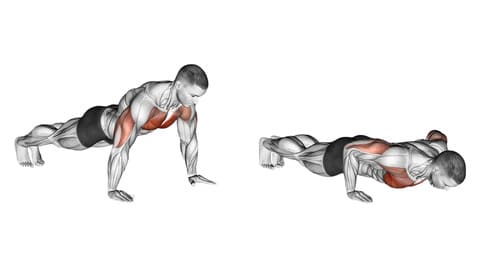
- Start in a high plank position with hands slightly wider than shoulders, body in a straight line from head to heels.
- Engage core and glutes, lower body by bending elbows until chest nearly touches the ground, keeping elbows at 45 degrees.
- Pause briefly, then press through palms to extend arms and return to start, exhaling on the way up.
- Maintain neutral spine throughout. Perform 3-4 sets of 10-15 reps, progressing to diamond or decline variations.
Treat your body like a rigid board to uphold plank integrity during push-ups, starting on knees for progression if needed to build strength safely. If wrist issues arise, opt for push-up handles to neutralize strain and promote better alignment. Always warm up with cat-cow stretches for spinal health.
💪 Working Muscles
Primary: Pectoralis Major (horizontal adduction during descent); Triceps Brachii (elbow extension in press); Secondary: Anterior Deltoids (shoulder flexion); Core Stabilizers (maintaining plank alignment)
Equipment Needed: None (bodyweight)
Difficulty: Beginner
✨ Benefits
Push-ups boost functional strength for everyday movements, correct posture imbalances, and elevate metabolic rate through full-body engagement in bodyweight training. They cultivate muscle endurance transferable to pushing sports like boxing or swimming. Regular sessions also improve cardiovascular health and mental resilience.
🔥 Burned Calories
Burns Approx. 50-70 kcal per 10 min at moderate intensity
Metabolic Impact: Moderate, excellent for bodyweight endurance
Common Mistakes
- Allowing hips to sag or pike, compromising core stability and straining the back.
- Flaring elbows out wide, increasing shoulder stress and reducing chest activation.
- Not lowering fully, limiting range of motion and muscle recruitment.