📋 How to Do?
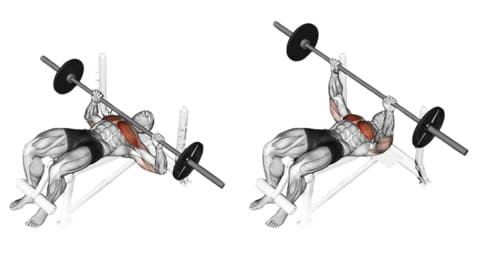
- Secure your feet in the decline bench pads and lie back, gripping the bar slightly wider than shoulders.
- Unrack and lower the bar to your lower chest, keeping elbows flared slightly.
- Inhale on descent, pause, then exhale and drive the bar up powerfully.
- Maintain control to avoid bouncing. Do 3 sets of 10-12 reps.
Secure your feet firmly in the pads to maintain leverage during decline bench presses, and never bounce the bar off your torso to protect chest tissues from bruising. Beginners should start with lighter weights to adapt to the angle and avoid shoulder or pec aggravation. Include rotator cuff warm-ups for enhanced joint protection.
💪 Working Muscles
Primary: Pectoralis Major (sternal head for lower chest depression and adduction); Triceps Brachii (strong elbow extension for lockout); Secondary: Anterior Deltoids (minimal shoulder flexion due to decline angle)
Equipment Needed: Barbell, decline bench, weight plates
Difficulty: Intermediate
✨ Benefits
The decline bench press emphasizes the challenging lower chest for superior symmetry and visual appeal, while heightening tricep involvement to strengthen lockout during presses. It elevates metabolic demand, aiding midsection fat loss and overall calorie burn. Ideal for advanced hypertrophy programs, it promotes balanced upper body aesthetics.
🔥 Burned Calories
Burns Approx. 60-80 kcal per 10 min at moderate intensity
Metabolic Impact: Moderate, ideal for lower chest development
Common Mistakes
- Not securing feet properly, causing slippage and loss of stability during the press.
- Bouncing the bar off the lower chest, which can bruise ribs or strain pecs.
- Over-flaring elbows, increasing shoulder vulnerability in the decline position.