📋 How to Do?
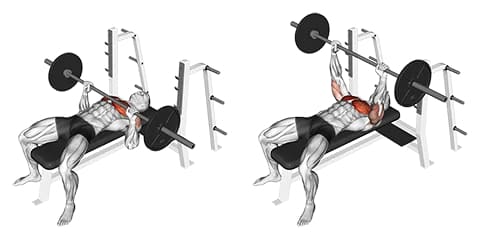
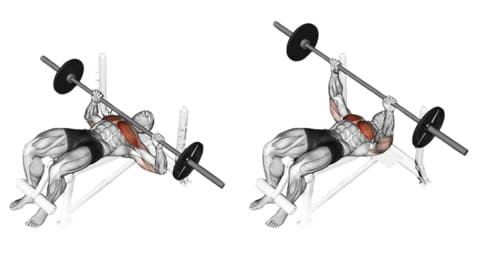
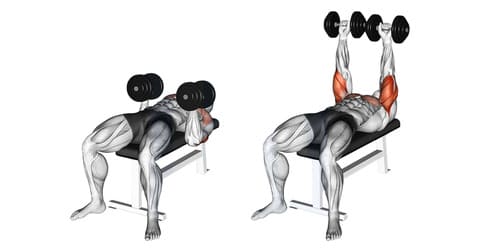
- Lie on a flat bench, dumbbells at chest level, palms facing forward, elbows at 45 degrees.
- Press weights up explosively until arms are extended, squeezing chest at top.
- Inhale and lower slowly until elbows are slightly below bench level for stretch.
- Perform 3-4 sets of 8-12 reps, focusing on controlled negatives.
Begin with lighter dumbbells to familiarize yourself with the movement path in bench press variations, maintaining neutral wrists to avoid discomfort. Employ a spotter for heavier sets to safely manage unracking and fatigue. Focus on slow eccentrics for controlled muscle loading and joint protection.
💪 Working Muscles
Primary: Pectoralis Major (horizontal adduction); Secondary: Triceps Brachii (extension); Anterior Deltoids (flexion); Rotator Cuff (stabilization)
Equipment Needed: Dumbbells, bench
Difficulty: Intermediate
✨ Benefits
The dumbbell bench press addresses strength asymmetries for even development, nurtures joint health via natural movement paths, and maximizes hypertrophy through deeper stretches in upper body sessions. It enhances stabilizer engagement for better athletic transfer. Long-term, it supports injury resilience and metabolic efficiency.
🔥 Burned Calories
Burns Approx. 60-80 kcal per 10 min at moderate intensity
Metabolic Impact: Moderate, ideal for balanced chest development
Common Mistakes
- Allowing dumbbells to collide at top, losing tension on chest.
- Flared elbows, shifting load to shoulders.
- Partial range, missing full pec activation.