📋 How to Do?
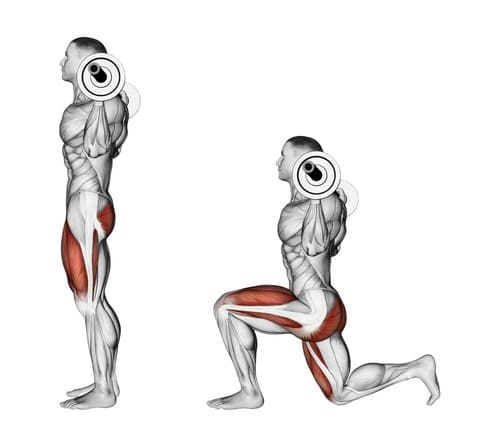
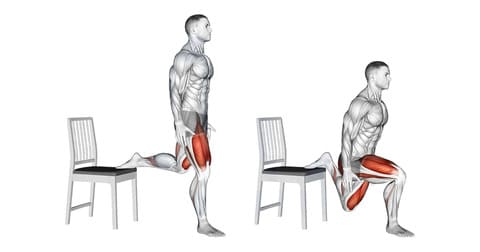
- Stand facing away from a bench with your rear foot elevated on it, positioning your front foot forward enough for a stable base.
- Lower your body by bending both knees until your front thigh is parallel to the ground and your back knee hovers near the floor, keeping your torso upright.
- Drive through your front heel to extend and stand tall, squeezing your glutes at the top without shifting weight to the back leg.
- Perform 3 sets of 8-10 reps per leg, focusing on controlled movement for optimal quad and glute activation.
Start with bodyweight to master form in Bulgarian split squats, ensuring a stable bench to prevent slips, and track your front knee over toes for joint safety. Warm up with dynamic lunges for hip prep. Stop if knee discomfort arises to avoid overuse injuries.
💪 Working Muscles
Primary: Quadriceps (knee extension); Gluteus Maximus (hip stabilization); Secondary: Hamstrings (eccentric control); Core (balance and anti-rotation)
Equipment Needed: Bench, dumbbells (optional)
Difficulty: Intermediate
✨ Benefits
Bulgarian split squats correct muscle imbalances effectively, boosting single-leg strength essential for sports like running or basketball while enhancing hip mobility for daily function. They promote quad hypertrophy and glute engagement for a sculpted lower body.
🔥 Burned Calories
Burns Approx. 70-90 kcal per 10 min at moderate intensity
Metabolic Impact: Moderate to high, great for unilateral leg training
Common Mistakes
- Allowing the front knee to cave inward, which stresses the joints and reduces glute activation.
- Leaning your torso forward excessively, shifting emphasis to quads over glutes and compromising balance.
- Using an uneven stance or improper foot placement, leading to overall imbalance and potential strains.