📋 How to Do?
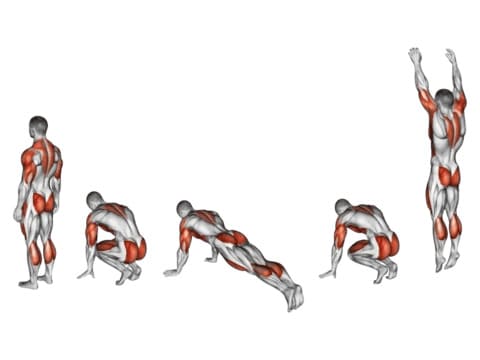
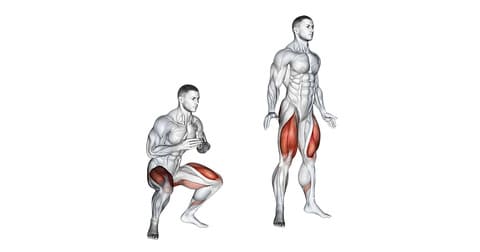
- Assume a squat position to parallel depth with feet shoulder-width, swinging arms back for momentum buildup.
- Explode upward by driving through heels, reaching arms overhead at peak height while exhaling.
- Land softly with bent knees to absorb impact, immediately resetting into the squat.
- Perform 3 sets of 10-15 reps, prioritizing control over speed.
Land with knees bent and on a cushioned surface during squat jumps to minimize joint impact and protect knees, scaling to step-ups if plyo sensitivity exists. Warm up with dynamic squats for prep, and focus on soft absorption for long-term knee health and injury prevention.
💪 Working Muscles
Primary: Quadriceps (jump phase); Glutes (hip extension); Secondary: Calves (takeoff propulsion); Core (landing stability)
Equipment Needed: None (bodyweight)
Difficulty: Intermediate
✨ Benefits
Squat jumps boost vertical leap and increase heart rate in explosive cardio workouts, building fast-twitch fibers for sports performance. They enhance metabolic conditioning and lower body resilience, with regular inclusion yielding 20% endurance gains in 6 weeks.
🔥 Burned Calories
Burns Approx. 90-110 kcal per 10 min at moderate intensity
Metabolic Impact: High, plyo HIIT
Common Mistakes
- Landing rigidly on straight legs, which stresses knees and joints excessively.
- Skipping full squat depth, resulting in reduced power generation and intensity.
- Keeping arms static without swing, limiting drive and coordination benefits.