📋 How to Do?
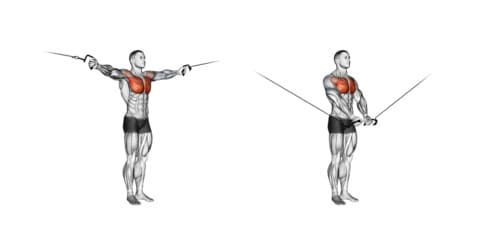
- Set cables at chest height, grab handles with crossed grip (right hand on left cable).
- Step forward into a staggered stance, lean slightly forward. Inhale and open arms wide in an arc.
- Exhale and squeeze pecs to bring hands together in front of chest.
- Keep a slight elbow bend. Perform 3 sets of 12-15 reps.
Avoid full arm lockout to sustain constant tension and protect elbows during cable crossovers, stepping forward just enough to maintain cable pull without overstressing the setup. Position elbows mindfully through the arc to safeguard shoulders from strain. Warm up with light bands for optimal mobility and injury prevention.
💪 Working Muscles
Primary: Pectoralis Major (sternal and clavicular heads for adduction and peak contraction across the chest); Secondary: Triceps Brachii (elbow stabilization); Anterior Deltoids (shoulder positioning during crossover)
Equipment Needed: Cable machine, handles
Difficulty: Intermediate
✨ Benefits
Cable crossovers provide peak contraction for superior muscle activation and growth in the inner chest, strengthening the mind-muscle connection to refine form across all chest exercises. As a low-impact isolation option, they spare joints while promoting endurance. They also support aesthetic chest separation and overall upper body balance.
🔥 Burned Calories
Burns Approx. 50-70 kcal per 10 min at moderate intensity
Metabolic Impact: Moderate, excellent for isolation and finishing sets
Common Mistakes
- Pulling too low or high, missing the chest squeeze and targeting wrong muscles.
- Using heavy weight that forces momentum, reducing isolation and risking shoulder pull.
- Not crossing cables fully, limiting the inner chest contraction.