📋 How to Do?
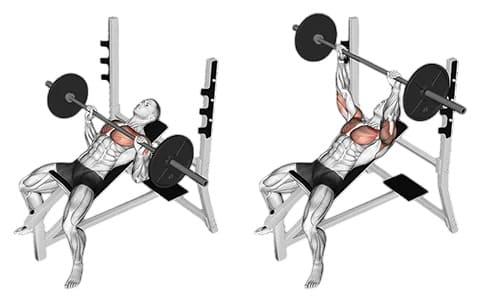
- Set the bench to 30-45 degrees and lie back with feet flat on the ground. Grip the barbell wider than shoulder-width.
- Unrack the bar and position it above your upper chest. Inhale and lower it slowly to the upper pecs, elbows tucked.
- Pause briefly, then press upward explosively, exhaling at the top. Keep the bar path straight.
- Avoid arching your back excessively. Perform 3-4 sets of 8-10 reps with moderate weight.
Plant your feet firmly for stability during incline bench press sessions, employ a spotter for heavier lifts, and tuck elbows at a 45-degree angle to minimize shoulder stress. Emphasize the controlled lowering phase to avoid excessive load on the shoulder capsule. Always incorporate a dynamic shoulder warm-up for optimal joint health.
💪 Working Muscles
Primary: Pectoralis Major (clavicular head for upper chest elevation and adduction); Triceps Brachii (elbow extension during the upward press); Secondary: Anterior Deltoids (primary shoulder flexor in the incline position)
Equipment Needed: Barbell, incline bench, weight plates
Difficulty: Intermediate
✨ Benefits
The incline bench press targets the upper chest for balanced, shelf-like pectoral development, while boosting shoulder joint stability to lower injury risks in overhead activities. It builds overall pressing strength vital for sports requiring upper-body power. Consistent use also aids in metabolic boost and aesthetic chest sculpting through targeted hypertrophy.
🔥 Burned Calories
Burns Approx. 60-80 kcal per 10 min at moderate intensity
Metabolic Impact: Moderate, focused on upper body hypertrophy
Common Mistakes
- Setting the bench angle too high (over 45 degrees), shifting focus to shoulders instead of upper chest.
- Allowing the bar to drift forward, causing shoulder impingement.
- Using excessive lower back arch, which can lead to spinal strain under load.