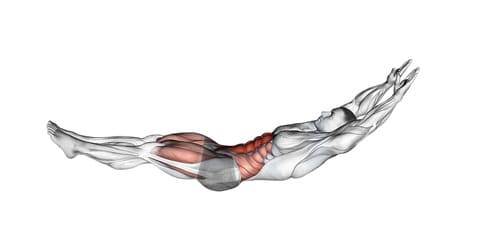
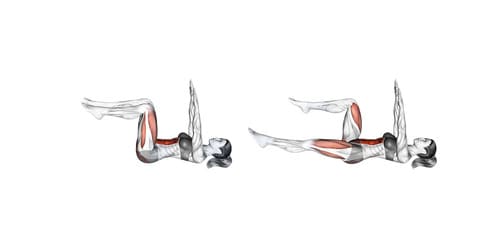
📋 How to Do?
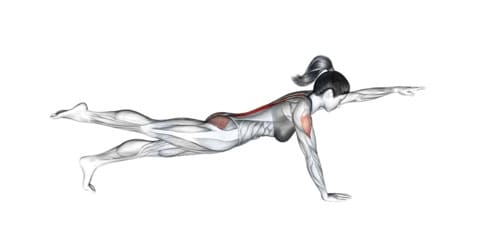
- Lie on your back with arms extended overhead and knees bent at 90 degrees, pressing your low back firmly into the floor to initiate bracing.
- Extend your opposite arm and leg slowly toward the ground, maintaining a flat back and controlled breathing while exhaling.
- Return to start by engaging the core, then alternate sides without momentum.
- Perform 3 sets of 10 reps per side, focusing on precision over speed.
Exhale during extension in dead bug to reinforce bracing, starting with one limb at a time if coordination challenges arise. Keep low back pressed throughout. Ideal for beginners—progress holds for added intensity without overload.
💪 Working Muscles
Primary: Transverse Abdominis (bracing); Secondary: Rectus Abdominis (control); Obliques (anti-rotation)
Equipment Needed: None (bodyweight)
Difficulty: Beginner
✨ Benefits
Dead bug strengthens stabilizers and improves coordination, offering low-impact benefits for back health in core routines. It enhances anti-extension endurance for daily function. Regular practice yields 15–20% posture improvement over 4–6 weeks.
🔥 Burned Calories
Burns Approx. 30-50 kcal per 10 min at moderate intensity
Metabolic Impact: Low, great for core stability
Common Mistakes
- Arching the back during extension, which defeats bracing and risks spinal strain.
- Moving too fast with momentum, reducing deep core engagement and control.
- Lifting the head excessively, leading to unnecessary neck strain and tension.