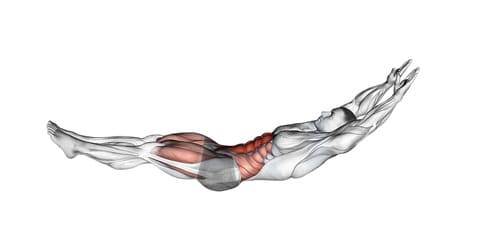
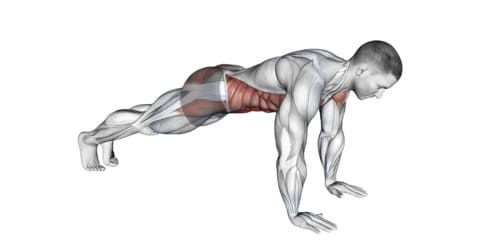
📋 How to Do?
- Start in forearm plank, elbows under shoulders, body straight from head to heels.
- Engage abs, glutes, and quads to prevent sagging or arching.
- Breathe steadily, gaze down.
- Hold 20-60 seconds, 3 sets; add rocks for progression.
Align body straight like a board, breathe evenly to sustain hold, and drop to knees if form breaks—build time gradually to avoid back or wrist strain in beginners.
💪 Working Muscles
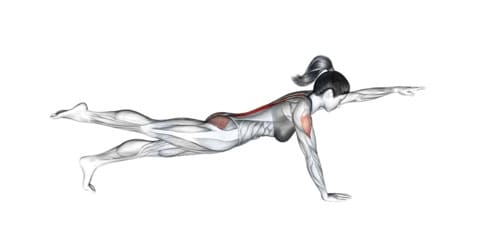
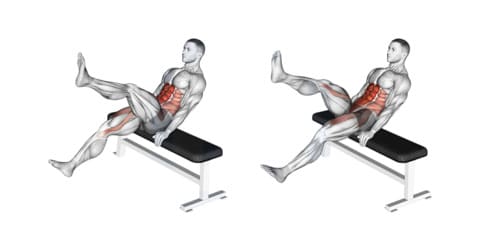
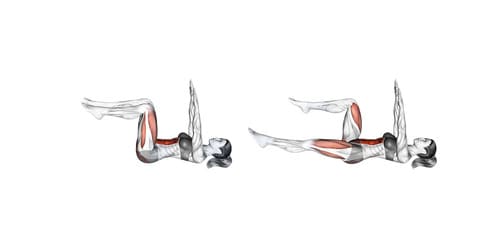
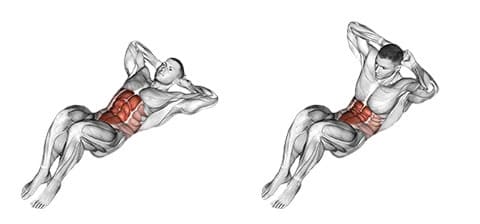
Primary: Transverse Abdominis (deep core compression for stability); Rectus Abdominis (anti-extension to hold plank); Secondary: Obliques (lateral stability); Erector Spinae (posterior balance); Glutes (hip extension prevention of sag)
Equipment Needed: None (bodyweight)
Difficulty: Beginner
✨ Benefits
Planks build deep core strength for better lift support. They improve posture by strengthening anti-extension muscles. They reduce back pain risk through spinal stability.
🔥 Burned Calories
Burns Approx. 30-50 kcal per 10 min at moderate intensity
Metabolic Impact: Low, ideal for isometric core work
Common Mistakes
- Sagging hips, compressing lower back.
- Protruding head forward, straining neck.
- Holding breath, increasing intra-abdominal pressure unsafely.