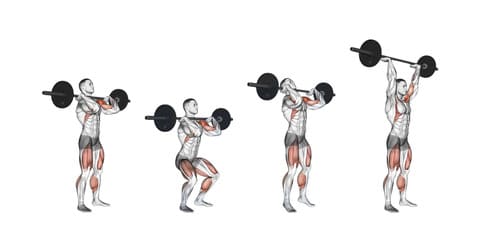
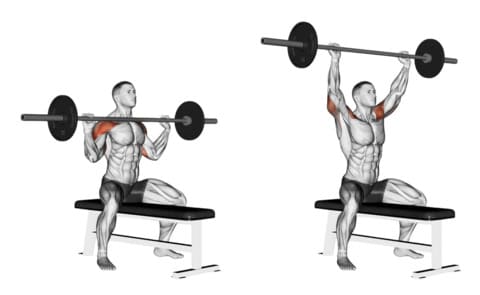
📋 How to Do?
- Stand or sit with feet shoulder-width apart, positioning the barbell at collarbone height with a grip slightly wider than shoulders and wrists neutral.
- Brace your core tightly, then press the bar overhead by extending elbows while exhaling, keeping the path straight above your head.
- Lower the bar controlled to chin level, inhaling deeply and resisting the descent to maintain tension.
- Avoid excessive back arching. Perform 3-4 sets of 6-10 reps, progressing weight as form allows.
Brace your core firmly to protect your back during overhead presses, maintaining a vertical bar path over your shoulders, and use a spotter for heavy sets to ensure safe execution. Warm up your rotator cuff with band pulls to minimize impingement risks. Scale to seated if standing challenges balance.
💪 Working Muscles
Primary: Deltoids (anterior head for shoulder flexion); Triceps Brachii (elbow extension to lock out overhead); Secondary: Trapezius (upper for scapular elevation); Upper Pectoralis Major (clavicular assistance in press)
Equipment Needed: Barbell or dumbbells
Difficulty: Intermediate
✨ Benefits
Overhead presses develop all three delt heads for rounded shoulders in deltoid training, while improving posture through upper trap engagement and boosting athletic throws. They enhance overall upper body power and metabolic rate. Clients see 20% stability gains in 6–8 weeks.
🔥 Burned Calories
Burns Approx. 60-80 kcal per 10 min at moderate intensity
Metabolic Impact: Moderate, great for shoulder compound lifts
Common Mistakes
- Arching the lower back excessively to compensate for weak core, which strains the spine and reduces delt activation.
- Pressing the bar forward instead of vertically overhead, leading to shoulder impingement and form breakdown.
- Locking elbows harshly at the top, which stresses the joints and risks elbow hyperextension.