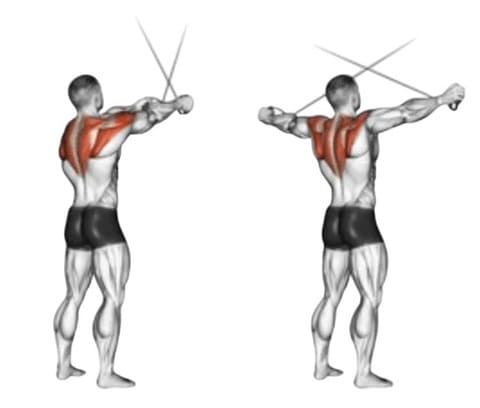
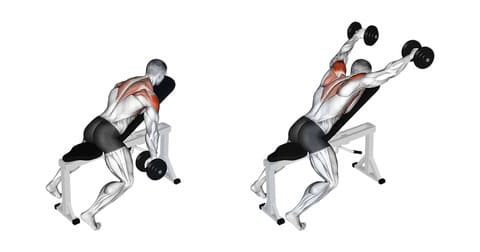
📋 How to Do?
- Lie prone on an incline bench with light dumbbells or bands, extending arms overhead in a Y shape with thumbs up for rotation.
- Lift arms upward by squeezing shoulder blades, raising until parallel to floor while keeping neck neutral.
- Lower controlled back to start, inhaling and resisting to engage eccentrics fully.
- Perform 3 sets of 12-15 reps, focusing on retraction over height.
Use very light or no weight initially for Y-raises, emphasizing form and retraction, and it's a great warm-up for shoulder days. Warm up with cat-cow poses for spine. Avoid if neck issues—opt for bands for gentler pull.
💪 Working Muscles
Primary: Rear Deltoids (abduction); Upper Trapezius (elevation); Secondary: Rhomboids (retraction); Supraspinatus (rotator cuff initiation)
Equipment Needed: Dumbbells, incline bench
Difficulty: Beginner
✨ Benefits
Y-raises enhance scapular stability and prevent imbalances, aiding overhead mobility in shoulder routines. They improve posture for desk workers. See 15% upper trap activation boost in 4 weeks.
🔥 Burned Calories
Burns Approx. 30-50 kcal per 10 min at moderate intensity
Metabolic Impact: Low, corrective for shoulders
Common Mistakes
- Using heavy weights that shift to traps over rear delts, reducing activation.
- Shrugging shoulders upward, bypassing proper scapular retraction.
- Performing fast reps without squeeze, missing eccentric benefits.